Analysis, guides and explainers on India's unlisted market — from IPO pipelines to ESOP liquidity.

<div class="gmail_default"> <strong>The second wave hit Mohan Meakin, YoY performance roar on the weaker base</strong> Breweries maker Mohan Meakin has announced its earnings for the quarter that ended on June 30, 2021, after the company board met and approved the unaudited results. The net profit of the old monk maker more than trebled in the June 2021 quarter, as against a net profit of Rs 1.33 crore in the same quarter the previous year. Mohan Meakin is India’s oldest alcohol company and has its roots in the time when India was ruled by Britishers. Edward Dyer established the Brewery at Kasauli in 1855. He was India’s brewing pioneer who brought – modern beer. The company reported a rise of 34.7 percent in the income from operation to Rs 140.59 crore during the April-June quarter of 2021, which was Rs 104.23 crore in the year-ago quarter. The Revenue from the Alcoholic segment increased about 35.6 percent to Rs 135.54 crore from Rs 99.93 crore, whereas the contribution of the nonalcoholic segment rose about 17 percent to Rs 5.05 crore from Rs 4.31 crore. In the alcoholic segment, the company produces products like Whiskey, Beer, Brandies, and Rum. Old Monk is its most famous rum. It produces juices, mineral waters, vinegar, and breakfast foods under its non-alcoholic umbrella. It also manufactures glass bottles, small extracts and exports alcoholic beverages like beer, rum, whisky, brandy, and gin in various nations of the world. Mohan Meakin 80% sales come from Old Monk, the favorite rum of Indians and the world's third-largest selling rum. It also sells beer under the brand Lion, Golden Eagle, and Black Night Brand. They account for an 8% share in the segment. It had reported a profit before tax (PBT) of Rs 1.8 crore in the first quarter of the previous fiscal, which rallied about 300 percent to Rs 7.16 crore in the first quarter of the ongoing fiscal. On a sequential basis, the income of the company halved and net profit declined about a quarter. It had reported a topline of Rs 305.8 crore and a bottom line of Rs 7.09 crore in the March 2021 quarter. The second wave of lethal coronavirus pandemic and nationwide restrictions impacted the economy during the June 2021 quarter. However, the company's business and operations continued as per the government guidelines. The total expenses of Moham Meakin jumped about 32.6 percent to Rs 137.07 crore in the Q1FY2022 as compared to the expense of Rs 103.41 crore in the Q1FY2021. The brewery player reported an EPS of Rs 6.29 per share in the given quarter against an EPS of Rs 1.57 in the same quarter the previous year. The EPS stood at Rs 8.33 per share in Q4FY2021. The face value of each share is Rs 5. </div>
<div class="gmail_default"><strong>How unlisted shares are traded?</strong></div> <div class="gmail_default"> Equity trading has grown leaps and bounces in recent times as retail investors have been rushing to the equity markets to fetch better returns. The craze of generating alpha, or the so-called supernormal returns has lured them to the pre-IPO or the unlisted market, where they are lapping up the unlisted securities, much prior to the IPOs of the companies. <strong>What are unlisted shares?</strong> An unlisted share is a financial instrument or a share, which is not traded in the formal exchange as the company does not meet the listing criterion. Trading of unlisted shares is done over the counter or OTC, which is done by select brokers or dealers. Unlisted securities are usually issued by smaller or new firms, which do not comply with the listing norms of the exchange. The trade-in of such securities is not very much frequent, thanks to the riskier and illiquid nature of the business. Unlisted markets are not regulated, however, are not illegal and the deals are completely valid. However, the nature of trade is completely different from those of the listed or the formal market. These shares are not registered on any exchange but are transferred through NSDL/CDSL This open market has a lot of potentials. Not just in India, there are various entities across the globe, which are involved and engaged in such transactions, which is adding to the popularity of the industry. Even shares of Facebook were widely traded in the unlisted market, before going public. <strong>Why are unlisted shares becoming hot these days?</strong> Unlisted shares of high-octane pre-IPO new-age companies are witnessing heavy interest among investors. Trading volumes and premiums have surged as the demand for shares of companies yet to list on bourses surges. Unlisted share markets have gained popularity over the years in recent history. Investors with sound wisdom, strong financial health, and long investment horizon buy stakes in growing companies, even before their IPO, and see the real magic of compounding. The high level of activities in the primary market and value picks at early stages have attracted a heavy number of investors in the pre-IPO markets. An ample number of gems, backed by top-notch parentage, are widely traded in the unlisted market. For example, HDFC Group's HDB Financial Services, Reliance Industries' Reliance Retail, multiple small finance banks, and various start-ups backed by prime players are gathering superior demand from the investors. <strong>New Regulatory changes to aid the unlisted market</strong> In a recent release from the Securities Exchange Board of India (SEBI), there are some big bang actions taken by the capital market regulator which are likely to be a booster for the industry. Headed by Chairman Ajay Tragi, the board decided to slash the lock-in period for the person, other than promoters (non-promoters) to six months from the date of allotment in the IPO market, instead of existing one year. Prior to this, the Pre-IPO equity or the securities purchased from unlisted market, were under the mandatory lock in of one year from the date of allotment, if the company decides to make a debut on the bourses. However, the shares can be sold in the informal market before the IPO. The period of holding of equity shares for Venture Capital Fund or Alternative Investment Fund (AIF) of category I or Category II or a Foreign Venture Capital Investor shall be reduced to 6 months from the date of their acquisition of such equity shares instead of existing 1 year. The change will likely boost the volume of the markets as the move will eliminate the risk of lock-in for a year and investors can make an early exit. Also, it will attract more investors to the market, who were skeptical over the lock-in period, which is now being halved. <strong>How to buy unlisted shares?</strong> Buying unlisted shares of a company has become very much easier for investors nowadays. However, the ticket size of investment is usually higher and the price of the share is decided by market demand, future outlook, and buzz of the company. Retail investors, like private equity funds and venture capitalists, can buy shares in the desired quantity. However, investors should always opt for reliable dealers or sellers in the unlisted market. To get the deal done, investors need to simply pay the amount to the trusted dealer from the bank account of the Demat account holder and the shares are transferred by the dealer. One can check the transferred shares in his depository partner account. Buying unlisted shares does not guarantee sure-shot prosperity to the investors. Investors would find more companies in the unlisted space as a wealth creator but that does not mean that you will find a gem all the time. One should not buy copper at the price of gold. Investors should understand that unlisted space requires patience, trust, and a longer time horizon as the company grows over into a successful venture if neutered properly. This market is not for traders or impatient buyers, who dream to become millionaires overnight. Additionally, finding the fair value of shares of unlisted companies is a big challenge, as just annual results and commentary from company management limit the information available for investors. Another big challenge for the industry is a huge mismatch between demand and supply. We can conclude that it is completely safe to buy unlisted shares if the investor has gone through the required process of unlisted shares that require a process of due diligence. Unlisted markets are riskier, but of course, more risk leads to more rewards. If you are willing to invest in the pre-IPO markets, it should be a small part of their portfolio. </div>

Manjushree Technopack Limited (MTL) is acquiring commercial operations and manufacturing facilities of Classy Kontainers as it is entering into a business transfer agreement with a latter one. The company announced the same on Monday. Manjushree Technopack is the largest rigid plastics packaging company in India, which is backed by private equity firm Advent International. Through the proposed acquisition, the company is trying to consolidate its position in the market. Manjushree Technopack will have access to all production units of Classy Kontainers. The facilities of the Classy Kontainers are located in the five cities and serves the clientele in various segments like paints, adhesive, speciality chemicals, FMCG and more. MTL has vast experience, spanning over four decades in the country. MTL caters to the packaging requirement of the FMCG, Food & Beverages, Homecare, personal care, agrochemical, pharmaceutical, and liquor industries. The company has a manufacturing capacity of 1.9 lakh million tonnes per year, with an annual turnover of Rs 1,200 crore. MTL is one of the top mid-sized plastic players in India. It exports to more than two dozen countries in the globe, having more than 100 machines for injection moulding with more than 300 patents. The company has manufacturing facilities in Baddi (Himachal Pradesh), Pantnagar (Uttrakhand), Guwahati (Assam), Noida (Uttar Pradesh), and Bidadi & Bommasandra, Bangalore (Karnataka). "The acquisition is in line with our aggressive, inorganic growth and business diversification plans," said Sanjay Kapote, MD & CEO of Manjushree Technopack. "It will allow us to consolidate our position as leaders in the rigid packaging sector and diversify our presence into new rigid packaging market segments - paints, adhesives, and specialty chemicals space." MTL’s technological strength, product range, and geographical spread, coupled with Classy Kontainers’ robust business will help us deliver complete packaging solutions to our customers in the future, he added. "Post-closing of the transaction, the promoters will continue to work with MTL to ensure a smooth transition and future business growth." Classy Kontainers is one of the largest custom-molded rigid packaging suppliers in India, which has expertise in HDPE & PP packaging. Class Kontainers has a production capacity of more than 12,000mt polymer processing. “Classy Kontainers is a pioneer when it comes to innovative solutions for rigid packaging in India with a passion for customer service," said Rajiv Mehta, partner at Classy Kontainers. With the strength of our team and MTL’s nationwide customer base in every segment we are confident this partnership will add tremendous value to our customers and help us take the business to the next level of growth, he added. Khaitan & Company was the legal advisor for the MTL, while Cyril Amarchand Mangaldas and Unaprime Investment Advisors acted as the legal counsel for Classy Kontainers. In the financial year 2019, the company clocked a revenue of Rs 1,154.39 crore, with an EBITDA of Rs 216.63 crore. It reported a net profit of Rs 498.57 crore in FY2019, whereas the EPS moved northwards to Rs 36.80.

<p><strong>NSE is all set to acquire NCDEX for a share swap ratio</strong> <strong>Highlights: <br /><br />What's in the deal</strong> <br /><br />1. The merger will mark the entry of NSE in the Agri commodity segment. <br /><br />2. Agri derivative trading has not been mainstream in India, but NSE is expected to make a change. <br /><br />3. SEBI wants NSE to merge with NCDEX before the much-awaited IPO of the equity bourse. <br /><br />4. NSE owns about a 15% stake in the NCDEX. The balance will be acquired at a value of Rs 900-1,000 crore. <br /><br />5. The deal may take shape by the end of this year. The largest derivatives exchange of the world, India's own National Stock Exchange (NSE), is at the ultimate stage of acquiring the National Commodity and Derivative Exchange (NCDEX). The acquisition is expected to happen at an enterprise value of Rs 900-1,000 crore. <br /><br />6. NSE was the original promoter and is the promoter of NCDEX and it still holds 15% in it as an anchor investor. According to some media reports, the acquisition is expected to be implemented in the next few months soon. There is a possibility of rejig in the top-level management. Market watchdog SEBI has given its nod to NCDEX to launch its IPO, which is expected to raise Rs 500 crore via its primary offering. However, if the deal between the two strikes, the IPO may take a back seat. Prior to this, NSE was trying to merge MCX with itself but the deal could not take shape, thanks to the multiple regulatory hurdles cited by SEBI. <br /><br /><strong>Struggling NCDEX</strong> <br /><br />NSE is the largest derivatives exchange in the world and is constantly scaling new highs in the equity trading business. On the contrary, NCDEX is struggling. NCDEX posted a consolidated net profit of Rs 8.46 crore in the previous year. In the commodity derivative segment, metal and bullion-centric Multi-commodity Exchange (MCX) has been elevated to almost a monopoly status, whereas agri-commodity focussed NCDEX is lagging behind. However, NCDEX reported an average daily turnover value of Rs 2,151 crore in July 2021, which is more than double from Rs 785 crore in the same month the previous year. If the deal is inked, NSE will once again compete with its arch-rival BSE in the Agri segment, which runs an e-Agricultural Market- a spotting platform for agricultural commodities. <br /><br /><strong>The Valuation Game</strong> <br /><br />The NCDEX and NSE merger is likely to push the latter's value higher, according to the market experts. State-run insurance behemoth LIC is the second-largest stakeholder in the NCDEX, owning an 11% stake. Other shareholders of NCDEX include National Bank for Agriculture and Rural Development (NABARD), Indian Farmers Fertilisers Cooperative Limited, Oman India Joint Investment Fund, Punjab National Bank, Canara Bank, Investcorp PE Fund I, Build India Capital, Shree Renuka Sugar, and Jaypee Capital. However, they are not likely to get cash from the deal. All the stakeholders are likely to be provided with a stake in NSE for their stake in NCDEX. The share swap ratio will be calculated after the due diligence. <br /><br />The total outstanding numbers of shares of NCDEX is more than 5.06 crore and NSE already holds more than 0.76 crore shares of the company. Thus, the company approximately has to acquire about 4.3 crore shares of the company. According to the market sources, the value of shares of NCDEX is about Rs 210-235 apiece. The success of the deal would estimate the true value of NSE, ahead of its much-awaited IPO. There is a strong belief within the SEBI that NSE has strong compliance with the regulations and has deep pockets to revive the agri-commodity sector in India. The current government is very much interested in the sector. <br /><br /><strong> <strong>About NCDEX</strong></strong> <br /><br />It offers 21 commodities to its more than 2.9 million clients to trade through its over 10,750 terminals, marking its presence in over a dozen states in the country. It has a storage capacity of 7.66 lakh MT. The company reported an income from operations of Rs 131.84 crore in the year ended on March 31, 2020, which is about 11.4% lower than the income of Rs 148.84 crore in the previous year. However, the net profit of the company eroded more than half to Rs 8.46 crore in FY 2019-20 from Rs 18.05 crore in FY 2018-19. The total expenses declined marginally to Rs 177.97 crore from Rs 180.3 crore. The profit before tax tanked 85 percent to Rs 2.4 crore as against Rs 16.1 crore during the period under review. Earning per share (EPS) of the company declined Rs 2.20 as against Rs 3.70 during the last year.</p>
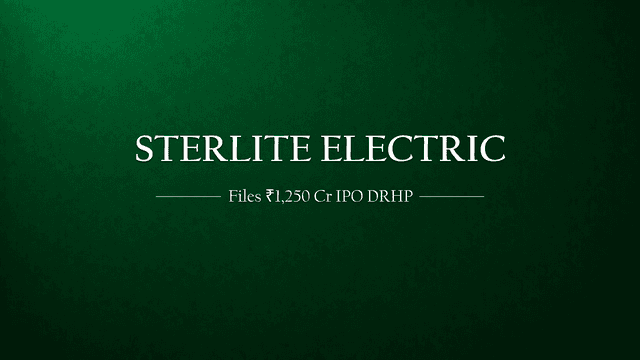
<p><strong>Sterlite Power files DRHP for a Rs 1,250 crore IPO<br /><br /></strong> Business Tycoons and Mining magnate Anil Agarwal's Sterlite Power Transmission Limited (SPTL) is all set to raise funds from the primary markets via its initial stake sale. The power transmission firm has filed the draft red herring prospectus (DRHP) with the market regulator Securities and Exchange Board of India (Sebi) to raise up to Rs 1,250 crore. The initial primary offer (IPO) of the company will entirely consist of the issuance of fresh equity shares with a face value of Rs 2 each. There will be a reservation of shares for employees of the company, but more details on this are still awaited. The company, in consultation with issue managers, may raise Rs 220 crore via pre-IPO placement, which may subsequently reduce the issue size of the company. <br /><br />Anil Agarwal and Twin Star Overseas promoted Sterlite Power Transmission will be listed on both the major exchanges- BSE and NSE. The company has allocated 75% of the net issue for qualified institutional bidders (QIB), whereas 15% of the net issue is reserved for non-institutional investors. Retail bidders will get the remaining 10% of the issue. SPTL has appointed Axis Capital Limited, ICICI Securities Limited, and JM Financial Limited as the book running lead managers to the issue. KFin Technologies Private Limited is the registrar of the issue. <br /><br /><strong>Financial health</strong> <br /><br />The company reported a consolidated profit after tax (PAT) of Rs 870.12 crore in the financial year 2020-21, which was Rs 942.97 crore in the previous fiscal. In the financial year ended on March 31, 2021, the consolidated income from the operations of the company stood at Rs 2,092.39 crore in the June 2021 quarter, which was about one-third lower than the income of Rs 3,004.32 crore in the fiscal year 2019-20. It reported a consolidated income of Rs 3,550.06 crore in the financial year 2018-19, with a net loss of Rs 524.76 crore. <br /><br />However, the expenses of the company were reduced to Rs 2,657.76 crore in FY2021 from Rs 3,728.32 crore in FY2020. The expenses in FY2019 were Rs 4,087.73 crore. Sterlite Power manufactures power products, and is in the business of power transmission, and offers solutions for problems of the intersection of time-space, and capital. It is the second most prominent power transmission company of India after PowerGrid and is ahead of Adani Transmission and Essel Group in terms of market share. The Institute of Energy Economics and Financial Analysis (IEEFA), in a report released in February 2020, pegged Sterlite Power’s market share at 31.5 percent in terms of tariff. PowerGrid had a market share of 36 percent, and Adani Transmission less than 18 percent. Sterlite has approximately 13,500 circuit km of transmission lines.</p>
<div class="gmail_default"> <strong>How do I sell my unlisted shares?</strong> Unlisted shares might be lesser-known, but not a new asset class for the investors. However, an unlisted market is a marketplace for those companies, which are public but not listed on the stock exchange. Such companies have a limited number of shares as the free float among the investors. Startups and other private companies offer stocks as a part of their compensation for their employees due to limited cash flow. It gives the employee a right of ownership as he actually owns a part of a company in the form of equity shares. If a company is listed on a stock exchange, the buying and selling of shares become very easy. This marks a swift entry or exit at any counter. However, in the case of unlisted shares, companies are not bound to follow the norms and regulations of the Securities or Exchange Board of India or SEBI. However, such incorporated enterprises are registered with the Ministry of Corporate Affairs. Entry in such companies is tough and exit from such enterprises is even tougher if you do not know the right way or mechanism. Selling listed public stocks is very easy as you only have to place the order and the trade takes place. It simply matches your selling price at which there is a buyer on the exchange. However, in the case of private stocks or unlisted stocks, the selling mechanism is very much different. However, the process remains the same but the procedure differs. In the unlisted market, investor or the employees reach out to the brokers or the dealers active in the unlisted market. Selling unlisted stocks means selling a stake in a company that is not listed on the exchanges. It can be a tedious task to find a prospective buyer on your own. Sometimes employees are in dire need to liquidate their position to get cash and finding a buyer on an immediate basis is not a very easy job. Sometimes, to sell your personal stake in an unlisted company, stakeholders need approval from the company boards as well. The process might be very much complicated, involving a lot of paperwork and approvals. One such example is the National Stock Exchange (NSE) which is widely in demand. <strong>Selling stocks of IPO bound companies</strong> There are various companies, which trade in the unlisted market ahead of their IPOs. Buying and selling shares of such companies is relatively easy as investors will continue to hold these stocks even after listing. However, there is a mandatory lock-in period for the pre-IPO stocks. There is a vast market for such shares and many dealers are active in this space. What may appear to be a venture capital market to the masses can be a potential Pre-IPO private company stock exchange for potential sellers. Employees and investors can use these markets for selling their stocks. <strong>Selling stocks of non-IPO companies</strong> It is comparatively difficult to sell stocks that have no plans of launching an IPO in the near future. Such companies are less in numbers and are even lesser-known among investors. Furthermore, the float of equity in the open market is very limited as well. This adds to the anonymity quotient of the companies. However, these companies release their quarterly numbers and result once a year so that investors can understand the financial health of the companies. Such companies are for the investors who wish to join the growth stories of a company at an early stage and can invest a decent sum for the longer horizon. Such a theme is called growth investment. For such tasks, investors always require a reliable name as they do not wish to be a victim of online scams or 'phishy' activities, which leads to the transfer of shares, and money is not given by the so-called dealers. Also, another challenge for the investor is to crack the deal at the fair value in the unlisted market as there are few elements that may try to misuse your need for the money. <strong>The Process of Sale</strong> The process of selling unlisted shares is very much easy if you are able to find a genuine dealer. Get in touch with the concerned entity or its spokesperson. An Investor will need to share your details with proofs including DMAT account, Client Master Report (CMR). The investor needs to transfer the unlisted share which he/she wants to sell with the quantities to the buyers or broker's DEMAT account. The same day when the dealer receives the unlisted shares in his DEMAT Account, the payment is done by the latter via the preferred mode of transfer. <strong>What is a Client Master Report (CMR)?</strong> Client Master Report (CMR) copy is a paramount document, required to buy unlisted and Pre IPO shares. CMR contains Depository Participant Identity (DP ID), Client ID, PAN number, Bank Account Number, along with more details. This can be easily obtained by sending an email to the broker and the same is delivered within a few hours. The dealer will require a PAN Card, Aadhar Card, and a copy of DIS Slip, which is used to transfer shares into the account. </div> <div class="gmail_default"></div> <div class="gmail_default"><strong>How to transfer unlisted or Pre-IPO shares </strong>It is possible to transfer shares from one Demat account to another using a simple procedure. Trading through a Demat account is just like making transactions through a bank account. The only difference is that you transfer shares through the Demat account instead of money.</div> <div class="gmail_default"> <strong>Offline procedure</strong> With respect to shares held with NSDL or CDSL depositories, the offline procedure for transfer of shares through off-market transfer is possible. One needs to fill out a DIS (Delivery Instruction Slip). ISIN number of the shares to be transferred, name of the company (security), Demat account, and DP ID of the account to which the shares are being transferred must be filled up in the form. The form needs to be submitted to the old broker’s office for further processing. <strong>Online procedure </strong>If shares are held with CDSL, there is an online facility for the transfer of shares using the ‘EASIEST’ platform. One needs to register on this platform using the link, <a href="https://web.cdslindia.com/myeasi/Home/Login" target="_blank" rel="noopener noreferrer" data-saferedirecturl="https://www.google.com/url?q=https://web.cdslindia.com/myeasi/Home/Login&source=gmail&ust=1629172696008000&usg=AFQjCNE0kTvjjbPj6AJLv-6brFmjLP4rqQ">https://web.cdslindia.com/<wbr />myeasi/Home/Login</a>, and follow the below procedure. <strong>Please Note</strong> : One can only transfers shares from CDSL Easiest to trusted demat account. So, before initiating the share transfer from CDSL easiest, please add the trusted demat account. <strong>How to Add trusted demat account?</strong> 1. Login on the CDSL account (<a href="https://web.cdslindia.com/myeasi/Home/Login">https://web.cdslindia.com/myeasi/Home/Login</a>) . 2. Go to "<strong>Miscellaneous</strong>" and Under that, click " <strong>Edit Trusted Account</strong>". 3. Enter the Demat ID of 16 numbers to whom you want to transfer shares. 4. An OTP will come on your mobile number to verify it. 5. The account will be approved by broker within 24 hrs and then you can transfer shares. <strong>How to transfer shares via CDSL Easiest?</strong> 1. Login on the CDSL account (<a href="https://web.cdslindia.com/myeasi/Home/Login">https://web.cdslindia.com/myeasi/Home/Login</a>) 2. Go to "<strong>Transaction Tab</strong>" and click "<strong>Setup</strong>". 3. Click "<strong>Bulk Setup</strong>" after that. 4. Select '<strong>Transaction</strong>' and enter the execution date and enter the Beneficiary owner ID(BOID), you need to transfer the shares to. In that page select ISIN. When you click on Account ISINs, you will see a list of all the ISINs in your holdings. Select the ISIN and enter the quantity and select the reason for trade from a list given. 5. Once you complete the above process, a verification will come. Verify it. Once you do that, a page will open, in that <em><strong>you needn't fill the Exchange ID, Counter Party Exchange ID, Market Type, Counter Party Market Type, Settlement ID and Counter Settlement ID for off-market transactions.</strong></em> 6. Finally click on "Commit" and type the 8 digit CDSL PIN which you have received on your email id when you have registered for CDSL Easiest. 7. The request will go the broker and he will verify it and transfer will be done. <strong>How to transfer shares via Angel Broking Online Facility?</strong> 1. Login to <strong><a href="https://trade.angelbroking.com/">https://trade.angelbroking.com/</a> 2. </strong>Go to <strong>"More" and </strong>Select<strong> " Online-DIS". 3. </strong>Select "<strong>Off-Market" </strong>and select whether you want to<strong> transfer in NSDL account or CDSL Account. 4. Enter target DP ID , Client ID, Reason of transfer, and select the scrip you want to transfer along with quantity. 5. After that you will be taken to CDSL website to enter TPIN (alternate to POA). </strong>If you don't have TPIN you can generate from the following link. <a href="https://edis.cdslindia.com/home/generatepin">https://edis.cdslindia.com/home/generatepin</a> <strong>6</strong>. Enter TPIN and the request will go to broker for transferring of shares. <strong>Charges for transferring shares via CDSL Easiest:</strong> 1. Rs.25 or 0.03% whichever is higher is the DP charges. 2. If the reason of transferring of shares is not gift or self transfer, then stamp duty of Rs.15 on 1 lac value transaction need to pay to CDSL. Calculator for Stamp duty - <a href="https://ww1.cdslindia.com/StampDuty/Cal_StampDuty.aspx">https://ww1.cdslindia.com/StampDuty/Cal_StampDuty.aspx</a> How to Pay Stamp duty - <a href="https://www.cdslindia.com/Downloads/Publications/Newsletter/2020/July%202020%20e-infoline.pdf">https://www.cdslindia.com/Downloads/Publications/Newsletter/2020/July%202020%20e-infoline.pdf</a> </div> <strong>Check out our video to understand more about transferring unlisted shares via CDSL.</strong> https://www.youtube.com/watch?v=isz0uKTRQSY
The Ramaraju Surgical Cotton Mills Limited (TRSCML) announced its earnings for June 2021 quarter. The company returned to the black, reporting a net profit of Rs 12 crore in the quarter ended on June 30, 2021, as against a net loss of Rs 5.79 crore in the year-ago quarter. The Rajapalayam (TamilNadu) based company had reported a rise of more than 130% in the revenue from operations toRs 84.33 crores in the first quarter of ongoing fiscal, whereas it had reported a total operating income of Rs 36.36 crore in the same quarter previous year. Ramaraju Surgical Cotton Mills is a part of Ramco Group of companies, which is engaged in other businesses like yarns, cement, roofing, and other building products. The company is the largest producer of absorbent cotton, gauze, bandages, and other wound-care products in Southern India and is included among the top players of the country. It has a monthly production capacity of over 125 tonnes of medical-grade bleached cotton and over 1.5 million square meters of bandages and gauze products. However, the net profit tanked about two-third or 64% from Rs 33.44 crore on a sequential basis and the operational income declined 15% from Rs 98.69 crore, against the previous quarter ended on March 31, 2021. The diluted Earning per share (EPS) of the antiseptic dressings manufacturer turned positive in the Q1FY2022 to Rs 30, which was Rs 15 below zero in the Q1FY2021. The EPS stood at Rs 85 in the Q4FY2021. The company witnessed a jump of 60% in the total expenses to Rs 70.56 crore in the April-June period on a year-on-year (YoY) basis from Rs 43.9 crore. On the contrary, the expenses declined on a quarter-on-quarter (QoQ) from Rs 94.39 crore. Incorporated in 1939, the company procures the raw material, that is the cotton, from the local farmers. The company is aiming to transform the region into an industrial society from an agrarian one. The company has reported an operating income of Rs 284.24 crore and 32.81 crores in the financial year 2020-21. The EPS during the previous financial year stood at Rs 83. The company has diversified its footsteps into spinning and weaving, which produces some of the world's finest cotton yarn. This is used to manufacture premium fabrics for shirtings, bed linen, and Jacquard cloth. The Metropolitan Stock Exchange of India (MSEI) listed entity brags more than 200 unique products in its portfolio, thanks to its workforce of more than 2,200 employees, toiling at its various facilities. The company has surgical facilities in Rajapalayam and Perumalpatti, whereas spinning units are located in Rajapalaiyam, Silvassa, Subramaniapuram, and Thirumalagiri. In FY 2019-20, the company derived about 41% (Rs 136 crore) from the textile segment, whereas the fabric segment contributed 46% (Rs 153 crore). Surgical and Windmills contributed 11% and 2% in the income, respectively. <a href="https://unlistedzone.com/storage/knowledge-logo/Intimation-of-Unaudited-Standalone-and-Consolidated-Financial-Results-for-the-Quarter-ended-30th-June-2021.pdf">Q1FY22Results</a>
Incorporated in December 1995, Xerox India Limited is engaged in the business of trading xerographic equipment, multifunction devices, laser printers, systems, consumables, paper, and providing after-sales services of machines sold which include servicing, repairing, and selling spare parts. Xerox India reported a net loss of Rs 12.92 crore in the financial year 2020-21. The company was in the black in the previous fiscal as it reported a net profit of Rs 11.89 crore. The company's income from operations declined almost one-third or 31.5% to Rs 324.97 crore in the FY2020-21 as against total revenue of Rs 474.45 crore in the previous fiscal. The bottom line and the top line of the company have been bleeding heavily due to the financial crunch, thanks to the lockdowns and restrictions shutting the offices nationwide and those open, are working with limited capacity. The company is going to hold its 25th Annual General Meeting (AGM) on September 15, 2021, Wednesday at Grand Ball Room II, Radisson Gurugram Sohna Road City Center, Gurugram, Haryana, India, at 12.00 noon. The company board will meet to consider and approve the financial results for the financial year 2020-21 and restructure its board and take on other routine issues. Despite a one-fourth fall in the expenses to Rs 346.98 crore, the company could not report a profit in the financial year ended on March 31, 2021. The company had reported a net profit of Rs 14 crore in the year-ago period. The earning per share (EPS) of the company's shares, with a face value of Rs 10 each, turned negative to 2.87 below zero from a positive of 3.19 in the period under review. The company has been constantly giving a hefty dividend for the last five years. However, considering the grim conditions due to the coronavirus pandemic, it is proposed not to recommend a dividend for the financial year ended March 31, 2021. The Gurugram based company is a public limited entity, ultimately controlled by Xerox Holdings Corporation, USA. The primary offerings span three main areas- Managed Document Services, Workplace Solutions, and Graphic Communications. The company provides efficient and effective printing and workflow solutions to its customers. It supports them via workplace solutions and graphic communications products. The company has a strong product portfolio of Desktop Printer, Office Printers, Multifunction, ConnectKey Technology, Scanners, Office Softwares, Small and Medium Business, and App Gallery.

These days, the companies are keen to get themselves listed on the bourses, filing DRHPs every other day. However, do you know many companies follow the reverse of it and get themselves delisted? In such cases, companies want to stop their shares from trading in the market. Delisting of equity shares from a stock exchange is exactly the opposite of listing of shares. The company promoters take off their shares from the exchanges so that they are not traded on exchanges further. For example, Vedanta Resources is trying to delist its flagship firm Vedanta from the exchanges. Vedanta, one a bluechip name, is heavily traded on both the stock exchanges. The delisting plan of Vedants is being done to simplify the complex business structure of the company. However, existing investors, including the LIC of India, are not very keen to give their stake at lower prices. <strong>What is delisting?</strong> Delisting of the shares refers to the complete and permanent removal of equity shares of a company from the stock exchanges for buying or selling purposes. This simply means that the shares will not be available to buy or sell on the stock exchanges, i.e., BSE or NSE. Just like the listing process, the complete procedure of delisting is governed by the market's regulator Sebi. <strong>Reasons for delisting</strong> Just like there are multiple reasons for getting a company listed on the bourses, the reasons to get it delisted from the stock exchanges are numerous too. A company plans for delisting its share from exchanges for various reasons, of which, major includes insufficient market capitalization, stock prices not matching a particular level, company filing for bankruptcy, failure to comply with regulatory norms, or merger and acquisition by some other player. <strong>There are two types of delisting- Voluntary and Compulsory.</strong> In voluntary delisting, a company decides on its own to remove its securities from a stock exchange whereas in compulsory delisting, the securities of a company are removed from a stock exchange as a penal measure for not making submissions or complying with various requirements set out in the Listing agreement within the time frames prescribed. <strong>What is the delisting mechanism?</strong> Sebi, under its rules and regulations, provides an exit mechanism to the existing shareholders in the following manner: Voluntary delisting whereby the exit price is determined through the Reverse Book Building process- The floor price is calculated in accordance with the regulations and the shareholders have to make a bid at a price either on or above the floor price. The exit price would be decided on the basis of bidding by the public shareholders. If the exit price so determined is acceptable to the promoter, the promoter pays that price to the investors, and the investors can exit. Those investors who do not participate in the Reverse Book Building process have an option to offer their shares for sale to the promoters. The promoters are under an obligation to accept the shares at the same exit price. This facility is usually available for a period of at least one year from the date of closure of the delisting process. To get the company delisted, at least 90 percent of the non-promoter shareholding shall be tendered by the shareholders. <strong>Voluntary Delisting for a small company-</strong> Any company with paid-up capital of less than Rs. ten crore and net worth less than Rs 25 crore, whose equity shares have not been frequently traded on any recognized stock exchange for a period of one year and has not been suspended for any non-compliance in the preceding one year would not be required to follow the Reverse Book Building process. In such cases, the promoter decides the exit price in consultation with the merchant banker. The promoter writes to all public shareholders informing the proposal for delisting. Once the requisite consent is received, the promoter makes payment of consideration for the same and the shareholders can exit. <strong>Involuntary or Compulsory delisting -</strong> refers to the formal removal of listed company shares from the stock exchange for various reasons like non-compliance with the listing guidelines. In such cases, promoters are asked to buy back the shares at the value determined by an independent evaluator. Note: A company that delists its equity shares from a recognized stock exchange but continues to remain listed on another recognized stock exchange would not be required to provide an exit opportunity to its shareholders provided the equity shares remain listed on any recognized stock exchange which has nationwide trading terminals. <strong>Is a comeback possible?</strong> Of course, a delisted stock can make a comeback and get relisted but there are strict guidelines. Sebi has a different set of rules for re-listing of the delisted companies. If a company is voluntarily delisted, it can be relisted only after five years or more from the date of its delisting. In the case of compulsory delisting, the company has to wait for at least 10 years. <strong>What happens to the delisted shares?</strong> Delisted shares can either be gain or pain for the investor, depending on the reason and process of delisting. If a stock is getting delisted, it is very crucial to analyze the reason for the same, before taking a decision to hold or sell it. Do investors benefit from the delisting of the shares? Probably, No. If the company or promoters are benefiting from the delisting of shares, in most of the cases, the answer is yes. There are certain rules and regulations that a company has to follow to safeguard the interest of the investors. Delisted companies do not have to follow these norms. One thing is very clear if a company is voluntarily delisted, there is something 'phishy' behind it. It is a common perception. However, if the company is compulsorily delisted, then definitely it is not following the listing norms. In both cases, investors lose money as such companies delist their equity at dirt cheap prices, most of the time. In many cases, shares of delisted companies have vanished from the Demat account of shareholders and investors lose all the money overnight. However, if the company is delisted and investors do not tender their shares, such stocks can be traded in the unlisted markets. The off-market is a good option for the investors to deal in such counters if the stocks are not written off from their Demat account. <strong>Is delisting penal?</strong> Voluntary delisting may not happen overnight. Though it gives room to investors to offload their stake at a particular price. If an investor continues to hold their stocks post-delisting, they still owe the legal and beneficial ownership rights over the stocks. However, if the delisting is compulsory, then whole-time directors, promoters, and group firms get debarred from accessing the securities market for 10 years from the date of compulsory delisting. Promoters of the delisted companies are required to purchase the shares from public shareholders as per the fair value determined by an independent valuer.

The inquiry is extremely straightforward and the response to this is more basic, simply a word, Yes. In any case, not all things are so smoothed out into the cycle that you can purchase pre-IPO equity very much like leafy foods in the city. For any organization, equity share capital is a standout amongst other approaches to raise finances that can be utilized for scaling, development, and advancement. At the point when an organization records itself on the stock trade, it turns into a traded on an open market organization. The equity portions of the organization get listed on the BSE as well as NSE, where they are openly tradable across retail and institutional investors. In the event that you put resources into the portions of a listed organization, you buy those listed shares. Yet, what might be said about the organizations, which were not listed? As a matter of fact, the other classification of the organizations likewise offers share cash-flow to the investors, which are known as unlisted shares. The other name for unlisted shares is pre-IPO equity as they are given by the organization to investors before their IPO. For Example, investors can purchase unlisted shares of Reliance Retail, OYO, Paytm (One97 interchanges) among others. Since unlisted shares are not listed or exchanged on any of the stock trades, investors would need to put resources into these shares through other non-regular modes, for example, vendors and representatives managing in such values. There are distinctive manners by which you can purchase unlisted shares of an organization. Nonetheless, before we dive into the methods of purchasing unlisted shares, we should comprehend the various parts of putting resources into them. <strong>For what reason do unlisted shares draw in investors?</strong> The organization issues shares to investors during the beginning phase, particularly when it is developing. Organizations, with creative thoughts and new innovation, produce income and can grow up to become set up players. For instance, Paytm is the key installment entryway and fintech player, though Ola is a taxi aggregator. Both of the new companies have acquired a tremendous transformation of people, upsetting the big deal change. Those investors, who wish to turn into a piece of such organizations at a beginning phase, head to an unlisted market. Be that as it may, not every one of the organizations is accessible in the unlisted market, and not every person can purchase these shares. Another central justification for putting resources into unlisted shares of an organization is that a couple of them are sponsored by solid parentage or are a piece of a major aggregate. For instance, Reliance Retail is a piece of Reliance Industries and HDB Financial Services is an arm of the HDFC bunch. On the off chance that investors accept that such auxiliaries will be a major achievement like their folks and anticipate that they should post solid returns, later on, they put resources into such unlisted shares. Putting resources into inventive and new organizations that have a ton of possibilities, investors decide to put resources into unlisted shares. <strong>Should know things about unlisted shares</strong> unlisted shares in India are extremely not the same as the listed shares yet putting resources into them requires a ton of schoolwork. Here are a couple of featured discussions prior to making a stride ahead: <strong>The interaction of venture:</strong> While purchasing listed shares incorporates a fast buy through the Demat account inside exchanging hours, putting resources into unlisted shares is a tiny bit troublesome. It requires some investment and you probably won't have the option to purchase an unlisted share in a split second. <strong>The installment:</strong> The installment should be done from the financial balance of the Demat account holder. It is an obligatory advance to wipe out the odds of tax evasion and other ill-conceived exercises. <strong>Desk work:</strong> Various organizations require a great deal of administrative work to designate your offers and notwithstanding consummation of documentation, a portion of offers isn't an assurance. Portions of the National Stock Exchange (NSE) are one such huge model. <strong>Size of Investment:</strong> Unlike listed business sectors, investors can not accept a few unlisted shares. There is a base ticket size for each share. Be that as it may, the retail ticket size isn't exceptionally large however it is sufficiently large to legitimize the exchange cost. <strong>Who owns the shares?</strong> Usually, unlisted shares are claimed by workers of the organizations, private supporters, financial speculators or new businesses and mediators. They offload their stake in the open market to sell their positions, which requires an unpredictable mode or market for such shares. <strong>Liquidity:</strong> Finding purchasers for unlisted shares is relatively troublesome as there are liquidity issues. Be that as it may, the new interest in such stocks has made them effectively tradable. <strong>Hazard Element:</strong> unlisted shares are more hazardous contrasted with listed shares. This is principally on the grounds that the shares have a place with organizations that are in their development stages. Such organizations may experience extensive misfortunes in a terrible stage making unlisted shares dangerous. <strong>Valuation of the shares:</strong> Since the shares are not listed on the stock trade, there is no reasonable equity system. The worth is totally controlled by the interest and supply of the shares. Such a worth probably won't be truly solid thus, it may end up being unsafe. <strong>Straightforwardness:</strong> There is restricted or no straightforwardness in the organization's monetary position that offers unlisted shares. In this way, additional endeavors are required. <strong>How to purchase unlisted shares?</strong> We should dig once again into the diverse manners by which you can purchase unlisted shares, which can be both of the accompanyings: <strong>Through vendors or new companies:</strong> Specialized new businesses have been made to bring to the table interests into unlisted shares. You can purchase unlisted shares through these new companies by opening a Demat account with them. Typically, base speculation of Rs.50, 000 is expected to put resources into the unlisted portion of each organization. You need to make the speculation forthright yet the conveyance of the shares is done based on T+3, that is, following three days of installment. You need to move the sum for purchasing the shares however the conveyance of the equivalent isn't ensured on the spot. It could be sooner than three days too. Since the conveyance is done following a couple of days, there is a counterparty hazard implied in purchasing unlisted shares through this mode. Be that as it may, not every person in the business is a fraudster. A large number of them are extremely useful names. <strong>From the representatives of the organization:</strong> Start-ups, while recruiting workers, typically share Employee Stock Ownership Plans (ESOPs). This permits workers to have equity proprietorship in the organization that they join. ESOPs permit workers to purchase portions of the organization at not really set in stone cost and after a predefined time. Along these lines, assuming the workers need to make their unlisted shares available for purchase, you can purchase the shares from them. To purchase shares from them, you contact the specialist. Your intermediary knows which unlisted shares come available to be purchased and can help you purchase the shares from workers making their stake available for purchase. <strong>From the advertisers of the organization:</strong> On many occasions, the advertisers place their stake in the organization available to be purchased. This is done through an interaction called Private Placement and the unlisted shares are put with banks and abundance supervisors. You can, then, at that point, put resources into unlisted shares through Private Placements done by the organization's advertisers. In any case, the cost for such a position is exceptionally high and you need a substantial sum to contribute. <strong>By putting resources into AIF:</strong> If you are a huge financial backer, hoping to put a lot of cash in PMS (Portfolio Management Services) or AIF (Alternative Investment Funds), you can get unlisted shares. Monetary establishments that deal with a PMS or AIF plot, as a rule, put resources into unlisted shares. These organizations bank on the pre IPO share valuation to acquire returns when the organization records itself and dispatches its IPO. Since the pre-IPO valuation is lower, PMS and AIF reserves get an enormous number of offers and create benefits when the valuation ascends because of a resulting IPO. PMS and AIF are specialty speculation classifications for HNIs, NRIs, and unfamiliar investors since they include a lot of assets. This model is reasonable for you just in case you are an enormous investor and wouldn't fret about facing the challenge. Besides, however, store administrators bank upon the increment in the valuation of shares after the IPO is dispatched, their call isn't generally right on target. A similar danger lied with other dynamic common assets too. Now and again, the organization's valuation may experience after it turns into a freely listed organization and the unlisted shares costs may fall causing misfortunes. In this way, remember the dangers while thinking about PMS and AIF and putting a huge piece of cash in unlisted shares. <strong>Crowdfunding stages:</strong> There are different crowdfunding stages that permit you to put resources into the equity capital of unlisted organizations. One can turn into a private backer, put resources into heavenly messenger assets and purchase unlisted shares of organizations enrolled on such stages. At the point when you put resources into the business through crowdfunding, you are helping the undertaking startup. It implies an impressive danger if the endeavor comes up short or can't build up itself. <strong>Errors to keep away from</strong> Regardless of whether it is a listed or unlisted market, if you don't watch out, you may wind up committing misfortunes because of some terrible errors. Such missteps would be exorbitant as you would impede your capital, bring about promising circumstance costs and even cause misfortune if the offers are degraded. <strong>*</strong> Do not follow the crowd mindset. Get your work done and research well about the organization prior to contributing. <strong>*</strong> If you are getting shares at extremely low rates, don't seize the opportunity. There may be a justification for existing investors taking an exit at lower costs. <strong>*</strong> Price changes of unlisted shares are impressively high. In the event of significant variances, evaluate the reasonable worth of the offer dependent on the organization's possibilities. <strong>*</strong> Do not put resources into unlisted shares with a transient venture skyline. Keep in mind, unlisted shares demonstrate their guts with time when the organization develops and sets up itself on the lookout. Have persistence and a drawn-out point of view. <strong>*</strong> Do not put resources into unlisted shares without a confided in a counselor to direct you. On the off chance that you need warning administrations, you can reach out to a large number of the rumored names which will help

<strong>Resins and Plastics Ltd</strong>. (RPL) is one of India’s leading Synthetic Resin manufacturers catering to a wide range of industries today such as Adhesives, Coatings, Printing Inks, Insulating Varnishes, Wire Enamels, Lamination, Construction, Cosmetics, Textiles, and Foundries. RPL commenced its operations in 1971 for manufacturing Alkyd Resins, Epoxy Resins, Foundry Resins, Ketonic Resins, and Phenolic Resins some of which are import substitutes. RPL’s manufacturing facilities are located at MIDC, Taloja in Maharashtra and GIDC, Ankleshwar in Gujarat, both of which are in close proximity to the shipping ports. RPL’s strength lies in its manufacturing and strong distribution network that spans across India. RPL has its own sales offices and branches across the country and also deals through a few major distributors across different regions.<!--more--> <strong>Operation Performance of Resin and Plastic Annual Report 2021</strong> 1. Despite COVID-19, during the financial year 2020-21, revenue from operations increased to 145 Crores as against 138 Crores, an overall growth of 5%. 2. The Profit after Tax for the current year is 12 Crores as against 8.57 Crores in the previous year 2019-20, an overall growth of 36%. 3. In FY20-21, NCL has approved the amalgamation of Pragati Chemicals into Resin and Plastics. Under this scheme, Resin and Plastics had allotted 6,00,000 Equity Shares of 10 each in the ratio of 5 (Five) equity shares for every 3 (Three) share held by shareholders of Pragati Chemicals Limited on 3rd September, 2020 pursuant to the scheme of amalgamation. 4. Resin and Plastics has given dividend of Rs.5.50 per share in FY20-21. 5. Trade Receivables has gone up from 30 Crores to 41 Crores. Due to which the cash flow from operations has become negative in FY20-21 which is negative for the business. <strong>Valuation of Resin and Plastic Unlisted Share?</strong> Total Outstanding Shares = 41,72,300 Unlisted Share Price = 325 Mcap = 135 Crores EPS = 28 P/E = 11x Mcap/Sales = <1
<div class="gmail_default">Elofic Industries, one of India's largest filter manufacturing companies producing a complete range of filters and lubricants, has come up with its annual results. The Faridabad-based auto ancillary has reported a sharp growth of 71.6% in the net profit to Rs 30.96 crore in the financial year ended on March 31, 2021. The company had reported a net profit or profit after tax (PAT) of Rs 18.04 crore in the previous year. The company reported an income of operations soared 21.97% to Rs 266.61 crore during the year ended on March 31, 2021, from Rs 218.58 crore in the previous year. Incorporated in 1973, Elofic Industries boasts a strong domestic and international clientage, which are the most trusted brands and pioneers in their industries. Among the domestic clients, the company has Maruti Suzuki, Tata Motors, Mahindra & Mahindra, Volvo Eicher Commercial Vehicles, Renault Nissan Mitsubishi Alliance (India), JCB India, Bosch, Action Construction, VST Tillers and Escorts on the board. Among the global and international clients, the company exports to Agro Tractors and Lombardini in Italy; Wabco in Germany; and Kohler Engines, Kawasaki Motors, Briggs and Stratton, and Generac Power Systems in the United States. However, the total expenses of the company jumped 14.29% to Rs 226.04 crore from Rs 197.77 crore during the period under review. The company reported a 72.31% growth in the profit before tax (PBT) to Rs 42.27 crore in FY 2020-21, compared to Rs 24.53 crore in FY 2019-20.</div> <div class="gmail_default"></div> <div class="gmail_default">Being one of India’s largest OEM suppliers, Elofic has a responsibility to deliver the best quality and high performance-driven products to its wide diversity of clientele perpetually. With an annual production capacity of over 85 million filters presently, it envisions to excel and manufacture 200 million units by 2020. The company has reported earning per share (EPS) of 123.44 in the financial year 2020-21, which was 71.92 in the FY 2019-20. Elofic provides a complete range of filters and lubricants. The company marks its presence in multiple states of India with half a dozen manufacturing facilities in Faridabad (Haryana), Nalagarh (Himachal Pradesh), and Hosur (Tamil Nadu). Promoters of Elofic, Mohan Bir Sahni and Kanwal Deep Sahni, owe over 58% stake in the company. It has a wholly-owned subsidiary in the United States named Elofic USA, LLC.</div>
Indicative prices, company research and your enquiries — in your pocket. Get price notes on the names you follow and reach our team from anywhere.