Blogs, insights, guides and videos on India's unlisted market — all in one place.

<p>Spinny – ek startup jo ban gaya hai India ke used car market ka game-changer! 🚗 Iss video mein hum karenge deep dive Spinny ke full-stack business model, unki journey from 2015 to unicorn, aur kaise wo Cars24 aur CarDekho jaise competitors se alag khade hain. ✅ Learn how Spinny ensures trust through ownership ✅ Revenue streams: margins, financing, insurance & subscriptions ✅ $283M funding & rapid expansion across 25+ cities ✅ Why investors are calling it India's Carvana</p>

<p>HDFC Securities FY’25 results are out — and it was fun to see the numbers! 📊 ✅ Operating Revenue up by 23% ✅ Operating Profit up by 21% ✅ PBT & PAT both above 18% ✅ EPS also improved by 7% ✅ Operating Margin slipped a bit, but still strong at 72% ✅ 57% fall on Impairment = better risk control!</p>
<p>Popular craft beer brand Bira 91 is currently under fire from former and current staff over unpaid salaries, outstanding reimbursements, and unresolved dues following months of layoffs. Several employees have come forward with allegations that they were either forced to resign or laid off with compensation still pending. One ex-sales executive shared that after resigning in December, he was asked to serve a two-month notice, only to have it shortened unexpectedly. Despite repeated assurances, his payments have remained pending for over three months, with the latest update pushing the due date to the end of May.</p> <p><strong>1. Internal Reassignments and Forced Resignations</strong><br />Tensions reportedly began in November 2024 when the company halted reimbursement for business travel and other expenses. Matters escalated in early 2025 as staff were abruptly reassigned to different states and job roles—marketing professionals were instructed to switch to sales, often in unfamiliar territories. According to a former employee, about 70% of the workforce faced similar shifts. Those unwilling to comply were allegedly pressured into quitting.</p> <p><strong>2. Massive Marketing Spend Amid Operational Disruptions</strong><br />Ex-employees have pointed to what they describe as poor financial planning, citing extravagant spending on branding and sponsorships. Bira 91 had allocated an estimated Rs 200–250 crore towards a five-year sponsorship deal with the ICC, which concluded in 2023, in addition to collaborations with several IPL franchises. However, while demand was being generated through high-cost ATL (Above The Line) and BTL (Below The Line) marketing campaigns, the supply side faltered. "There was no stock, vendors weren’t paid, raw materials stopped coming in, and breweries came to a standstill," said one employee.</p> <p><strong>3. Label Change Triggers Operational Setbacks</strong><br />In 2023, Bira 91 underwent a legal name change, which required product relabelling across multiple regions. This relabelling process led to a chain reaction—delays in supplier payments, a shortage of summer stock, and ultimately, disruption during the peak beer production season. Insiders claim that the widely publicized Rs 80 crore loss attributed to labelling issues was merely a smokescreen for deeper financial mismanagement.</p> <p><strong>4. Industry View: Rapid Expansion Gone Wrong</strong><br />Experts from the alcoholic beverage sector point to Bira’s overambitious growth strategy as a root cause of its troubles. Vinod Giri, Director General of the Brewers Association of India, commented that beer brands seeking rapid expansion often miscalculate their operational capacities. “Scaling with the wrong regional focus or underutilized infrastructure can backfire quickly,” he noted.</p> <p><strong>5. Investor Backing Didn’t Prevent Financial Slide</strong><br />Despite securing significant backing—approximately USD 457 million from investors like Sofina, Kirin Holdings, MUFG Bank, and Peak XV Partners—Bira 91 has struggled to maintain financial stability. Its most recent funding round of USD 25 million closed in 2024. However, the company’s revenue dropped by 22% to Rs 638 crore in FY24, while net losses ballooned to Rs 748 crore, largely due to inventory write-offs associated with the relabelling initiative.</p> <p><strong>6. Scaling Missteps and Misunderstood Economics</strong><br />Industry analysts argue that Bira 91’s pivot from a niche identity to a scale-focused model came at the cost of operational balance. Sanjay Jain, an expert in the alco-bev space, remarked, “Beer relies heavily on volumes. While Bira carved out a unique market early on, the sudden push for expansion missed the mark. Venture capital tends to approach it like an FMCG play, but the economics of beer production are fundamentally different.”</p> <p><strong>Conclusion: A Brand at Crossroads</strong><br />Bira 91 now finds itself at a critical juncture—grappling with dissatisfied employees, financial strain, and supply chain hiccups. What was once a poster child of India's new-age beer movement must now reassess its strategy and restore trust among both its internal teams and external stakeholders.</p>

<h3 data-pm-slice="1 1 []">A) Overall Performance</h3> <p>HDB Financial Services Ltd. reported its standalone and consolidated audited financial results for the quarter and year ended March 31, 2025. The joint statutory auditors have issued an unmodified opinion, and the financials were prepared in compliance with Indian Accounting Standards (Ind AS).</p> <div><hr /></div> <h3>B) Loan Book Growth</h3> <p>The company witnessed strong loan book expansion during the fiscal year:</p> <ul data-spread="false"> <li> <p><strong>Loan Book as of March 31, 2025:</strong> ₹1,03, 343 Cr</p> </li> <li> <p><strong>Loan Book as of March 31, 2024:</strong> ₹86, 721 Cr</p> </li> <li> <p><strong>YoY Growth:</strong> ₹16,621 Cr</p> </li> </ul> <p>This 19.2% YoY increase reflects HDB’s continuing expansion in its lending business.</p> <div><hr /></div> <h3>C) Revenue and Profitability</h3> <h4>• Revenue from Operations:</h4> <ul data-spread="false"> <li> <p>FY25: ₹16,300 Cr</p> </li> <li> <p>FY24: ₹14,171 Cr</p> </li> <li> <p><strong>YoY Increase:</strong> ₹2129 Cr (+15%)</p> </li> </ul> <h4>• Interest Income:</h4> <ul data-spread="false"> <li> <p>FY25: ₹13,835 Cr</p> </li> <li> <p>FY24: ₹11,156 Cr</p> </li> <li> <p><strong>YoY Increase:</strong> ₹2679 Cr (+24%)</p> </li> </ul> <h4>• Profit After Tax (PAT):</h4> <ul data-spread="false"> <li> <p>FY25: ₹2175 Cr</p> </li> <li> <p>FY24: ₹2460 Cr</p> </li> <li> <p><strong>YoY Decline:</strong> ₹284 Cr (-11.6%)</p> </li> </ul> <p>While revenue growth remained robust, the decline in PAT is attributable to a sharp rise in provisioning costs.</p> <div><hr /></div> <h3>D) Asset Quality and NPA Trends</h3> <h4>• Gross Stage 3 Ratio (NPAs):</h4> <ul data-spread="false"> <li> <p>FY25: 2.26%</p> </li> <li> <p>FY24: 1.90%</p> </li> </ul> <h4>• Stage 3 Provision Coverage Ratio:</h4> <ul data-spread="false"> <li> <p>FY25: 55.95%</p> </li> <li> <p>FY24: 66.82%</p> </li> </ul> <h4>• Impairment on Financial Instruments:</h4> <ul data-spread="false"> <li> <p>FY25: ₹2113 Cr</p> </li> <li> <p>FY24: ₹1067 Cr</p> </li> <li> <p><strong>YoY Increase:</strong> ₹1045 Cr (+98%)</p> </li> </ul> <p>The data clearly indicates rising stress in the loan book. The increase in the Gross Stage 3 ratio, combined with a drop in provision coverage, signals a weakening asset quality position. The significant increase in impairment expenses has directly impacted net profitability.</p> <div><hr /></div> <h3>E) Sectoral Risk Indicators</h3> <p>While the report does not identify a specific sector under stress, disclosures under the <strong>Resolution Framework for COVID-19</strong> suggest that:</p> <ul data-spread="false"> <li> <p><strong>Personal Loans</strong> and <strong>Corporate borrowers (including MSMEs)</strong> were most impacted.</p> </li> <li> <p>Several accounts previously classified as standard (as of September 2024) slipped into NPAs by March 2025.</p> </li> </ul> <p>This trend indicates that <strong>retail lending, particularly in the personal loan segment</strong>, continues to face pressure post-COVID, likely contributing to higher Stage 3 assets.</p> <div><hr /></div> <h3>🤝 UnlistedZone View</h3> <p>HDB Financial Services showed healthy loan book and income growth in FY25, but rising NPAs and provisioning have dampened profitability. The decline in provision coverage is a key concern that will need to be addressed.</p> <p>While growth remains strong, <strong>asset quality and risk management</strong> will be critical going forward, especially in the context of retail loan stress and potential macroeconomic headwinds.</p> <p>Investors should closely monitor:</p> <ul data-spread="false"> <li> <p>Changes in provisioning strategy</p> </li> <li> <p>Trends in Stage 2 and Stage 3 assets</p> </li> <li> <p>Exposure to high-risk sectors (e.g., unsecured personal loans)</p> </li> </ul> <div><hr /></div> <p><strong>Conclusion:</strong> HDB’s FY25 performance highlights the classic NBFC trade-off: strong top-line growth versus the challenge of maintaining asset quality in an uncertain environment.</p> <p>FY26 will be crucial to observe whether HDB can rein in its NPAs while sustaining growth momentum.</p>

<p>India’s EV revolution just hit a major controversy. BluSmart – the electric cab startup promising a green future – seems to be tangled in a web of questionable corporate moves. Behind the scenes, Gensol Engineering's promoter allegedly used shareholder money to build BluSmart… but without making it a proper subsidiary. Why? 🔍 In this video, we expose: How BluSmart began with a bold promise Gensol’s hidden involvement The conflict of interest that raises major governance concerns BluSmart's ongoing financial struggles And whether its recent move to Uber is a lifeline or a red flag </p>
<h2 class="" data-start="345" data-end="397">A) Context: SEBI’s Interim Order Sends Shockwaves</h2> <p class="" data-start="399" data-end="797">On April 15, 2025, the <strong data-start="422" data-end="471">Securities and Exchange Board of India (SEBI)</strong> issued a detailed interim order exposing large-scale financial irregularities and corporate governance lapses at <strong data-start="585" data-end="615">Gensol Engineering Limited</strong>. The order named <strong data-start="633" data-end="677">Anmol Singh Jaggi and Puneet Singh Jaggi</strong>, the promoters of Gensol, for alleged misappropriation of public funds, diversion of loans, and misleading disclosures.</p> <p class="" data-start="799" data-end="960">These two individuals are also key stakeholders in <strong data-start="850" data-end="883">Matrix Gas and Renewables Ltd</strong>, an unlisted company whose shares are actively traded in the private market.</p> <h2 class="" data-start="962" data-end="1010">B) Key Allegations Against the Jaggi Brothers</h2> <p class="" data-start="1012" data-end="1069">SEBI’s 29-page order outlines a comprehensive pattern of:</p> <ul data-start="1070" data-end="1430"> <li class="" data-start="1070" data-end="1167"> <p class="" data-start="1072" data-end="1167"><strong data-start="1072" data-end="1111">Diversion of ₹262 Cr+ loan proceeds</strong>, meant for EV procurement, to promoter-related entities</p> </li> <li class="" data-start="1168" data-end="1248"> <p class="" data-start="1170" data-end="1248"><strong data-start="1170" data-end="1200">Creation of fake documents</strong> to mislead credit rating agencies and investors</p> </li> <li class="" data-start="1249" data-end="1350"> <p class="" data-start="1251" data-end="1350"><strong data-start="1251" data-end="1289">Use of funds for personal expenses</strong>, including luxury real estate and foreign currency purchases</p> </li> <li class="" data-start="1351" data-end="1430"> <p class="" data-start="1353" data-end="1430"><strong data-start="1353" data-end="1398">Routing of funds through related entities</strong>, one of which is <strong data-start="1416" data-end="1430">Matrix Gas</strong></p> </li> </ul> <h2 class="" data-start="1432" data-end="1484">C) Direct Mention of Matrix Gas in the SEBI Order</h2> <p class="" data-start="1486" data-end="1626">The SEBI order specifically names <strong data-start="1520" data-end="1554">Matrix Gas and Renewables Ltd.</strong> as a <strong data-start="1560" data-end="1593">beneficiary of diverted funds</strong>. According to the investigation:</p> <ul data-start="1627" data-end="2011"> <li class="" data-start="1627" data-end="1723"> <p class="" data-start="1629" data-end="1723">Matrix Gas received <strong data-start="1649" data-end="1661">₹63.9 Cr</strong> from Wellray Solar, a conduit entity used by Gensol promoters</p> </li> <li class="" data-start="1724" data-end="1865"> <p class="" data-start="1726" data-end="1865">Additionally, <strong data-start="1740" data-end="1765">₹46 Cr of these funds</strong> were eventually used for <strong data-start="1791" data-end="1814">stock market trades</strong>, some of which involved the scrip of Gensol itself</p> </li> <li class="" data-start="1866" data-end="2011"> <p class="" data-start="1868" data-end="2011">The promoters allegedly used Matrix Gas as one of the vehicles to <strong data-start="1934" data-end="1958">park or rotate funds</strong>, raising serious questions about financial integrity</p> </li> </ul> <h2 class="" data-start="2013" data-end="2057">D) Implications for Unlisted Shareholders</h2> <p class="" data-start="2059" data-end="2142">Investors holding <strong data-start="2077" data-end="2107">Matrix Gas Unlisted Shares</strong> must consider the following risks:</p> <h3 class="" data-start="2144" data-end="2172">1. <strong data-start="2151" data-end="2172">Reputational Risk</strong></h3> <p class="" data-start="2173" data-end="2317">Now that its promoters are under SEBI scanner and barred from capital markets, Matrix Gas’s brand equity and credibility take a significant hit.</p> <h3 class="" data-start="2319" data-end="2345">2. <strong data-start="2326" data-end="2345">Regulatory Risk</strong></h3> <p class="" data-start="2346" data-end="2485">Being named in an ongoing SEBI investigation could result in further scrutiny, enforcement actions, or funding restrictions for Matrix Gas.</p> <h3 class="" data-start="2487" data-end="2512">3. <strong data-start="2494" data-end="2512">Liquidity Risk</strong></h3> <p class="" data-start="2513" data-end="2649">As concerns rise, investor appetite in the unlisted market may shrink, <strong data-start="2584" data-end="2606">reducing liquidity</strong> for existing shareholders looking to exit.</p> <h3 class="" data-start="2651" data-end="2691">4. <strong data-start="2658" data-end="2691">Corporate Governance Overhang</strong></h3> <p class="" data-start="2692" data-end="2826">If similar practices are found within Matrix Gas, its valuation, access to capital, and future listing potential could be compromised.</p> <h2 class="" data-start="2828" data-end="2852">E) The Bigger Picture</h2> <p class="" data-start="2854" data-end="3137">What makes this case critical is that <strong data-start="2892" data-end="2931">Matrix Gas is not just “associated”</strong> with Gensol — it is a <strong data-start="2954" data-end="2999">directly named recipient of misused funds</strong>. This raises concerns not just about past financial practices, but about <strong data-start="3073" data-end="3108">future operational transparency</strong> and <strong data-start="3113" data-end="3136">investor protection</strong>.</p> <hr class="" data-start="3139" data-end="3142" /> <h2 class="" data-start="3144" data-end="3174">F) Our View at UnlistedZone</h2> <p class="" data-start="3176" data-end="3429">At UnlistedZone, we believe in identifying high-potential private companies for investors — but <strong data-start="3272" data-end="3311">transparency and promoter integrity</strong> are non-negotiable. The developments around Gensol and Matrix Gas <strong data-start="3378" data-end="3397">raise red flags</strong> that investors must not ignore.</p> <p class="" data-start="3431" data-end="3475">We advise all stakeholders in Matrix Gas to:</p> <ul data-start="3476" data-end="3648"> <li class="" data-start="3476" data-end="3532"> <p class="" data-start="3478" data-end="3532">Closely monitor SEBI’s ongoing forensic audit outcomes</p> </li> <li class="" data-start="3533" data-end="3599"> <p class="" data-start="3535" data-end="3599">Reassess exposure based on risk tolerance and investment horizon</p> </li> <li class="" data-start="3600" data-end="3648"> <p class="" data-start="3602" data-end="3648">Await clarity on management’s response, if any</p> </li> </ul>

<p>In a significant move highlighting global interest in India’s evolving energy landscape, Norwest Venture Partners has acquired a 5% stake in Power Exchange India Limited (PXIL). PXIL, a key platform facilitating power trading in India, is jointly backed by the National Stock Exchange (NSE) and the National Commodity & Derivatives Exchange (NCDEX). The investment comes as India steps up efforts to modernize its electricity market infrastructure and increase transparency in the sector.</p> <p><br /><strong>1. India’s Energy Demand on the Rise</strong><br />Driven by rapid urbanization, industrial expansion, and increasing energy needs, India has emerged as one of the world’s largest and fastest-growing energy consumers. To meet this surge sustainably, the country is pushing for market-based power distribution solutions. PXIL, with its efficient trading mechanisms and tech-enabled services, plays a crucial role in this transformation.</p> <p><strong>2. Power Exchanges at the Core of Energy Reforms</strong><br />Exchanges like PXIL are central to India’s goal of reshaping how electricity is generated, traded, and consumed. By offering platforms that promote fair price discovery and reduce inefficiencies, PXIL contributes to a more competitive and cleaner energy ecosystem. The company’s leadership in rolling out innovative trading solutions and products puts it in a strong position to lead India’s green energy transition.</p> <p><strong>3. A Vote of Confidence from Norwest</strong><br />Niren Shah, Managing Director at Norwest India, emphasized the importance of transparent, market-led platforms in driving India’s energy reforms. “India’s energy market is at a critical juncture, and PXIL’s role in enabling this transformation is vital,” he noted. Ankit Prasad, Principal at Norwest, added that PXIL’s focus on product innovation, digital upgrades, and regulatory alignment make it a standout player in the sector.</p> <p><strong>4. Laying the Digital Foundation for Energy Trading</strong><br />India’s regulatory stance is increasingly favoring digital, transparent, and market-based energy trading systems. PXIL has been proactive in developing forward-looking solutions to match these policy directions. Upcoming initiatives include blockchain-enabled peer-to-peer solar trading, cross-border power transactions, green corridors, and carbon credit platforms. These innovations are set to expand market access and promote cleaner energy adoption.</p> <p><strong>5. Momentum for the Future</strong><br />Satyajit Ganguly, PXIL’s Managing Director and CEO, welcomed the partnership with Norwest as a timely and strategic boost. “This collaboration supports our ongoing expansion and technology-led product development journey. With Norwest’s global expertise, we are ready to scale new heights in market participation and trading innovation,” he said.</p> <p><strong>6. PXIL’s Diverse Institutional Backing</strong><br />PXIL has a strong institutional foundation, with backing from NSE, NCDEX, and major players in India’s power ecosystem including Power Finance Corporation, Tata Power Trading, GMR Energy, and JSW Energy. This wide base of stakeholders reinforces PXIL’s credibility and reach across the energy sector.</p> <p><strong>7. Implicit Gains for NSE: Strengthening the Ecosyst</strong>em<br />Though not a direct revenue driver, PXIL’s progress aligns well with the NSE’s broader growth strategy. As more trading activity moves through PXIL, NSE benefits indirectly through deeper market penetration, brand influence in critical infrastructure sectors, and alignment with future energy policies. This partnership underpins NSE’s silent but strategic expansion into adjacent markets that could drive long-term valuation and resilience.</p> <p><strong>8. About Norwest Venture Partners</strong><br />Norwest Venture Partners is a global investment powerhouse managing over $15.5 billion in capital. With a strong track record of backing high-potential companies across consumer, enterprise, and healthcare sectors, Norwest brings strategic expertise and growth support across markets in the U.S., India, and Israel.</p> <p><br /><strong>About PXIL</strong><br />Founded in 2008, Power Exchange India Limited (PXIL) has transformed India’s power trading landscape by offering reliable, transparent platforms for energy transactions. Jointly promoted by NSE and NCDEX, PXIL has consistently driven innovation in the Indian power market through customized trading solutions, policy advocacy, and technology-first execution.</p>

<p>Even as global markets face instability due to trade tensions and tariff hikes, India’s equity market is experiencing a sharp rise in domestic investor participation. Latest data from the National Stock Exchange (NSE) reveals that the number of registered investors surpassed 11.2 crore as of February 2025. This growth reflects how Indian households are increasingly seeing equity markets as a reliable avenue for wealth creation, even in times of uncertainty.</p> <p><strong>1. A Remarkable Month of Growth in February 2025</strong><br />In February alone, the NSE added 11.3 lakh new investors—marking one of the strongest single-month gains in its history. Total client codes on the exchange now stand at 21.9 crore, a number that factors in multiple registrations by single investors through various trading members. This expanding client base is not only a reflection of investor confidence but also an indication of the NSE's deepening role as a national financial infrastructure provider.</p> <p><strong>2. One-Year Trends Reflect a Changing Investment Culture</strong><br />The pace of growth over the past year has been extraordinary. From 9 crore investors in February 2024 to 10 crore by August 2024, and now 11 crore by January 2025—the rapid onboarding of retail investors signals a broader shift in India’s saving and investing culture. Enabled by seamless digital platforms and increasing financial literacy, market access is no longer limited to institutional players or urban populations.</p> <p><strong>3. North India Leads India’s Investor Map</strong><br />Region-wise, North India is now home to the highest number of market participants, with 4.1 crore registered investors. West India follows with 3.4 crore, South India with 2.3 crore, and East India with 1.3 crore. This regional tilt indicates an expanding economic footprint and improved market penetration in emerging states.</p> <p><strong>4. Double-Digit Growth in North and East</strong><br />North and East India posted the fastest year-on-year growth in new investor additions, growing by 27.7 percent and 27.3 percent respectively. South India recorded a 23.7 percent increase, while West India grew by 20.1 percent. These numbers highlight how India's new investor class is coming from regions that were traditionally less represented in financial markets.</p> <p><strong>5. A Structural Shift Over Five Years</strong><br />When viewed over a five-year window, the trend becomes even clearer. North India's share of total investors rose from 28.7 percent in 2020 to 36.3 percent in 2025. East India's share increased from 9.9 percent to 12 percent. Conversely, West and South India saw a relative decline, dropping from 35.4 percent to 30.3 percent and 24.6 percent to 20.6 percent respectively. This demographic change is expected to influence future capital market strategies, product offerings, and outreach.</p> <p><strong>6. Retail Momentum Enhances NSE’s Financial Foundation</strong><br />The growing investor base has a direct yet understated impact on NSE’s business model. More investors lead to higher trading volumes, which in turn result in increased transaction-based revenue, including exchange fees and clearing charges. As retail investors become more active participants in equity, derivative, and ETF markets, the revenue stream from these activities adds to the exchange’s topline. NSE’s ability to maintain robust infrastructure while scaling services nationwide enhances its positioning as a market leader.</p> <p><strong>7. Tariff Wars and Global Tensions: The External Shock Absorber</strong><br />The surge in domestic retail participation is also helping Indian markets stay resilient amid global uncertainties. The recent tariff hike by the United States—particularly on strategic imports such as semiconductors, electric vehicles, and green tech products—has sent ripples across the world economy. However, India's capital markets have remained comparatively stable, largely because of a steady flow of domestic liquidity from retail investors.</p> <p><strong>8. A Cushion Against Foreign Volatility</strong><br />As global capital becomes more sensitive to geopolitical risks, foreign institutional investor (FII) outflows have been erratic. In this context, retail inflows serve as a much-needed cushion. For the NSE, this dynamic is crucial. A higher share of domestic participation reduces the exchange's dependence on volatile FII-driven trading activity, offering more predictable and sustainable business performance over time.</p> <p><strong>Conclusion: I</strong>ndia’s Market is Evolving, and NSE is at the Core<br />India’s retail investor base is undergoing a transformation—both in size and geography. This evolution is not just a reflection of investor optimism, but also a vote of confidence in institutions like the NSE, which continue to drive market access and integrity. As more Indians enter the stock market, NSE is poised to benefit from rising trade volumes, diversified product engagement, and enhanced market depth—factors that will quietly but significantly improve its financial performance and long-term positioning in the global financial ecosystem.</p>
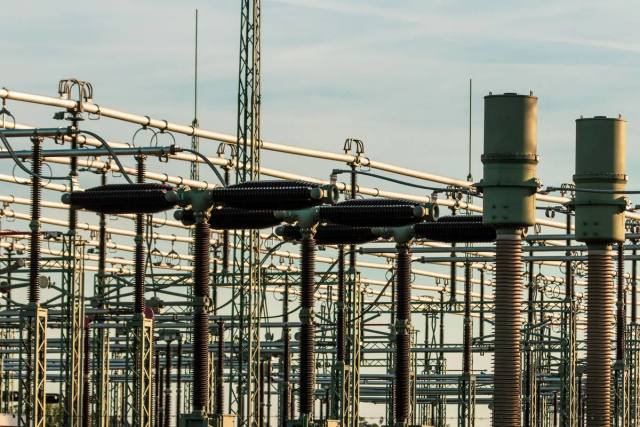
<p>In this video, we break down the business model of Spray Engineering Devices Limited (SEDL) — a leading technology-driven engineering company catering to the sugar, ethanol (biofuel), jaggery, and water treatment industries. Founded in 2004, SEDL provides energy-efficient and sustainable solutions that help industries reduce power, steam, and water consumption. The company is known for its patented engineering products, turnkey project execution capabilities, and strong R&D focus. 📣 Drop your thoughts in the comments section below – we’d love to hear from you!</p>

<p>Lord’s Mark Industries just signed a $1 million (₹8.3 crore) deal with the US for their advanced healthcare technology This isn't just a deal – it’s a massive step into the $88 billion US digital health market, showing the world what Indian innovation is capable of. And they’re not stopping at healthcare – they’re making waves in biotech, renewable energy, and finance too.</p>

<p>Tata Group is making waves in the digital world with a massive $1.3 billion boost! 🤑 BigBasket gets $1B to supercharge its dark stores and 10-minute delivery game, while Tata 1mg grabs $300M to expand express delivery and offline presence. This bold move is part of Tata Digital’s mission to dominate quick commerce and online healthcare — and finally hit profitability. The competition just got serious! </p>
Indicative prices, company research and your enquiries — in your pocket. Get price notes on the names you follow and reach our team from anywhere.